Benefits of a Personal Coach: Results, Trends & Your First Session
Whether you’re new to the gym or you’ve been training for years, a Personal Coach can shorten the gap between effort and outcomes. Below is a practical, results-driven look at what the research says, what’s trending in 2025, and how to walk into your first meeting with confidence—including what to expect and what to ask.
Results-driven data: why supervised training works
Peer-reviewed work and major health organizations consistently show that structured, supervised exercise outperforms “winging it” for many people:
- Stronger outcomes: Randomized trials and reviews often report greater strength and body-composition improvements with supervised or one-on-one coaching from a Personal Coach versus unsupervised programs, especially when volume and intensity are progressed systematically.1
- Better adherence: Individualized programming and accountability are linked to higher exercise adherence—one of the biggest predictors of long-term results.2
- Safer movement: Coaches teach technique, regress or progress exercises, and help reduce injury risk—especially important if you’re returning from time off or managing joint pain.3
- Public health alignment: Guidelines (e.g., WHO and ACSM) emphasize moderate-to-vigorous activity plus strength training for health; a coach helps you hit those targets efficiently without guesswork.4
None of this replaces medical advice—but it does mean that a qualified coach is a data-aligned way to invest your time in the gym.
Latest trends (2024–2025): how training is evolving
Across the industry, a few patterns show up again and again—many of them align with how we work at Legacy Health and Fitness in Kuna:
- Wearables + coaching: Heart rate, sleep, and recovery data are increasingly used to adjust session intensity and weekly load—not to chase scores, but to train smarter.
- Hybrid and “micro” sessions: Shorter, focused sessions plus clear homework (steps, mobility, conditioning) help busy people stay consistent.
- Hybrid strength + conditioning: Blending strength work with conditioning and mobility for real-world fitness and longevity—not just aesthetics.
- Community + 1:1: Many people combine small group energy with occasional one-on-one blocks for personalization—both can support adherence and motivation.5
- Longevity and function: Training for “healthspan”—muscle, balance, bone density, and cardiovascular resilience—is a growing focus across age groups.
What to expect at your first meeting with a Personal Coach
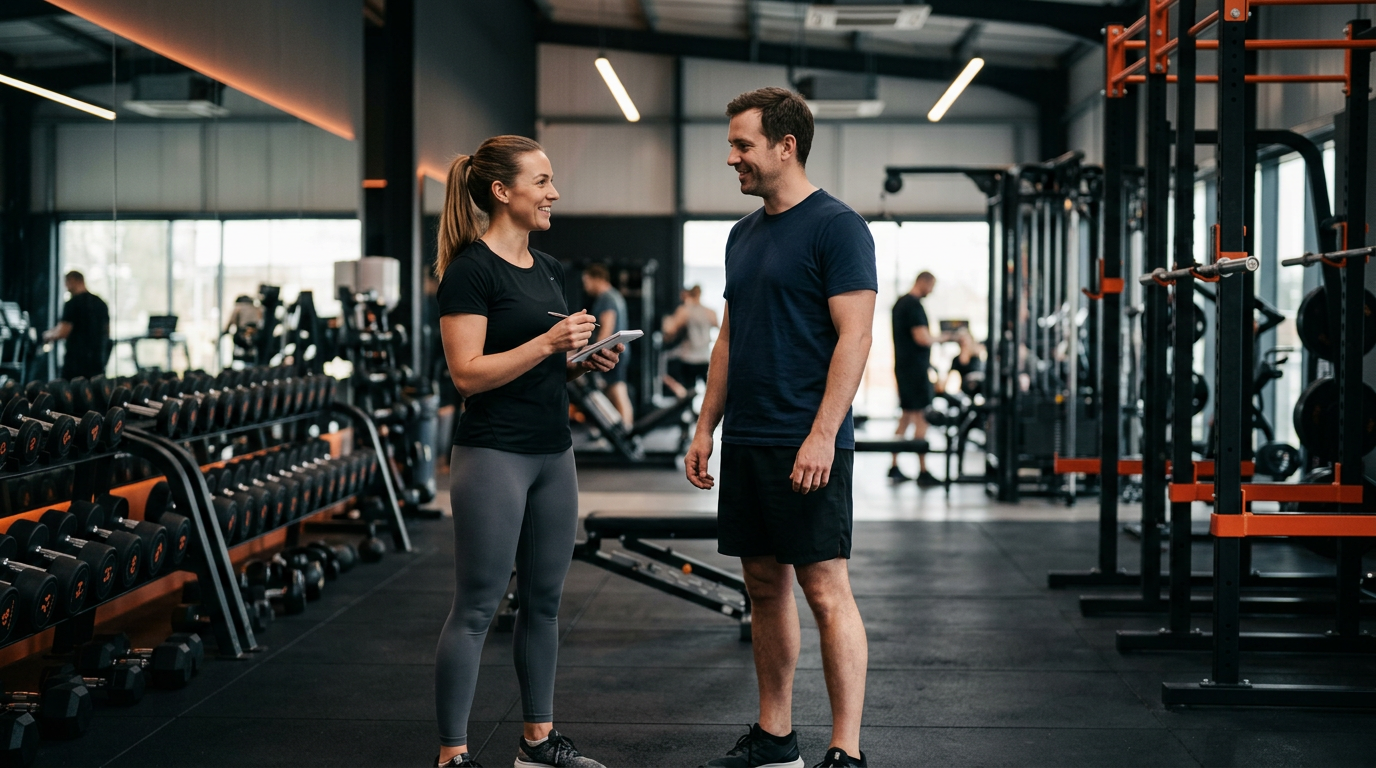
Every gym does this slightly differently, but a high-quality first session usually includes:
- Conversation: Goals (fat loss, strength, performance, confidence), schedule, injuries, and what you enjoy—or don’t—about exercise.
- Assessment: Might include movement screening, simple strength or cardio baselines, or body measurements—only what’s appropriate for your goals.
- Plan outline: How often to train, what a week looks like, and how progress will be measured (performance, reps, photos, habit checks, etc.).
- Introductory workout (often): A short, manageable session so you experience the coach’s style and communication.
You should leave with clarity—not confusion. If something feels rushed or purely sales-driven, it’s reasonable to pause and compare options.
Smart questions to ask your coach (first meeting)
Bring a notebook or note on your phone. Questions that help you choose the right fit:
- Credentials & experience: “What certifications do you hold, and have you worked with people with my goals or limitations?”
- Process: “How do you build programs week to week, and how do we measure progress?”
- Schedule & logistics: “What’s your availability, cancellation policy, and typical response time?”
- Training style: “How do you balance pushing me versus recovery—especially if I’m stressed or short on sleep?”
- Equipment & space: “What will we emphasize in this gym—free weights, machines, conditioning, mobility?”
- Expectations: “What should I do between sessions to support results?”
Great coaches welcome questions. They’re a sign you’re serious about your time and money.
Why Legacy Health and Fitness in Kuna ID
We’re a local, community-focused gym with 24/7 access and expert support—so you can combine independent training with coaching when you need it. New members can get a free session with a Personal Coach to experience professional guidance from day one. Whether you’re in Kuna, Meridian, Boise, or the wider Treasure Valley, you get flexible membership and a team that cares about results and relationships.
Join Legacy Health and Fitness in Kuna and get your first session on the calendar—bring the questions above, and we’ll help you build a plan that fits your life.
References
1. Meta-analyses and RCTs on supervised vs. unsupervised resistance training (e.g., strength and body-composition outcomes; peer-reviewed sports medicine literature).
2. Adherence and individualized programming in exercise behavior research (e.g., journals of behavioral medicine, sports science).
3. NSCA / exercise science resources on technique, injury reduction, and progression.
4. WHO physical activity guidelines; ACSM recommendations for adults (aerobic + strength).
5. Group + small-group training literature on motivation, social support, and adherence (e.g., small-group supervised training studies).
Frequently Asked Questions
Ready to train with a plan?