Is Strength Training Safe for Kids? A Guide for Kuna Idaho Parents
Every year around the start of youth sports seasons, parents ask the exact same question. Your ten-year-old wants to tag along to your workout, or their soccer coach suggested they build some strength for the fall league. So, is strength training safe for kids? The short answer is a resounding yes. In fact, research consistently shows that supervised, age-appropriate resistance training is one of the most effective ways to build bone density, improve coordination, and prevent sports injuries in growing bodies. The single most important factor isn't the child's age, but their ability to follow instructions and prioritize perfect technique over heavy weights. If you want a welcoming place to build those healthy family habits, Legacy Health and Fitness in Kuna, Idaho, offers a supportive environment where you can set a positive example for your young athletes.
Is strength training safe for kids before puberty?
Yes, is strength training safe for kids before puberty? Absolutely. When properly supervised and focused on technique rather than heavy loads, major organizations like the American Academy of Pediatrics agree it is completely safe. It builds foundational strength, improves neuromuscular coordination, and significantly reduces the risk of sports-related injuries.
Because children have not yet gone through puberty, they do not have the circulating hormone levels required to pack on significant muscle mass. When a nine- or ten-year-old gets stronger from lifting weights, that strength doesn't come from their muscles getting huge. It comes from neuromuscular adaptations. Their nervous system simply gets better at communicating with their muscle fibers, teaching their body how to recruit those fibers more efficiently.
You might also like: Resistance Training for Seniors: A Kuna Idaho Guide to Staying Strong
This improved body awareness pays massive dividends outside the gym. A child who understands how to brace their core, hinge at the hips, and land softly from a jump is a child who is far less likely to tear an ACL on the soccer field or roll an ankle on the basketball court. The American College of Sports Medicine (ACSM) notes that youth resistance training can enhance cardiovascular risk profiles, improve motor skills, and foster a lifelong positive attitude toward physical activity. Results may vary depending on consistency and individual physical development, but the baseline safety and efficacy are well established by sports science.
Will lifting weights stunt a child's growth?
No, lifting weights will not stunt a child's growth. This is a decades-old myth with no scientific backing. Evidence shows that structured, age-appropriate resistance training actually strengthens growth plates, increases bone mineral density, and promotes healthy physical development in children.
The persistent myth about stunted growth usually stems from a misunderstanding of growth plate fractures. Epiphyseal plates (growth plates) are the cartilaginous areas at the ends of long bones where growth occurs. While a severe injury to a growth plate can potentially affect bone growth, research shows that these injuries almost never occur during supervised strength training. In reality, a child is far more likely to suffer a growth plate injury falling off the monkey bars, playing contact sports, or riding a skateboard than they are doing a properly executed goblet squat.
You might also like: Menopause Perimenopause and Strength Training: A Kuna Idaho Guide
Weight-bearing exercises stimulate bone remodeling. Just as muscles get stronger when challenged, bones become denser and more resilient when subjected to the controlled stress of resistance training. This early investment in bone health is crucial, as the bone mass built during childhood and adolescence serves as the structural foundation for the rest of their lives.
Why youth strength training matters for Treasure Valley athletes
Living in the Treasure Valley means leading an active lifestyle, and our kids are right in the thick of it. Whether your child is gearing up for football under the Friday night lights in Meridian, playing competitive club soccer in Nampa, or just burning off energy hiking the Boise foothills on the weekends, physical resilience is mandatory.
Idaho weather also demands a lot from young athletes. They might find themselves running conditioning drills in 100-degree summer heat or navigating slick, icy fields during late-fall tournaments. A solid foundation of strength protects their joints against unpredictable terrain and aggressive opponents. When we ask, is strength training safe for kids, we also need to ask: is it safe to send them onto a highly competitive sports field without a foundation of strength?
Building that physical resilience early also helps kids manage the physical demands of their daily lives, from hauling heavy backpacks to school to keeping up with their peers on the Indian Creek Greenbelt. It gives them the confidence to tackle physical challenges without fear of immediate injury.
If you want a 24/7 gym that accommodates your busy parenting schedule so you can set a good example for your kids, join Legacy Health and Fitness. Our doors are always open, making it easy to fit your own training in around school drop-offs and weekend sports tournaments.
How much weight should a child lift?
A child should only lift a weight they can comfortably move for 8 to 15 repetitions with perfect form. The focus must always be on movement quality, not maximum load. One-rep max testing is generally discouraged for young kids until they reach physical maturity and have years of lifting experience.
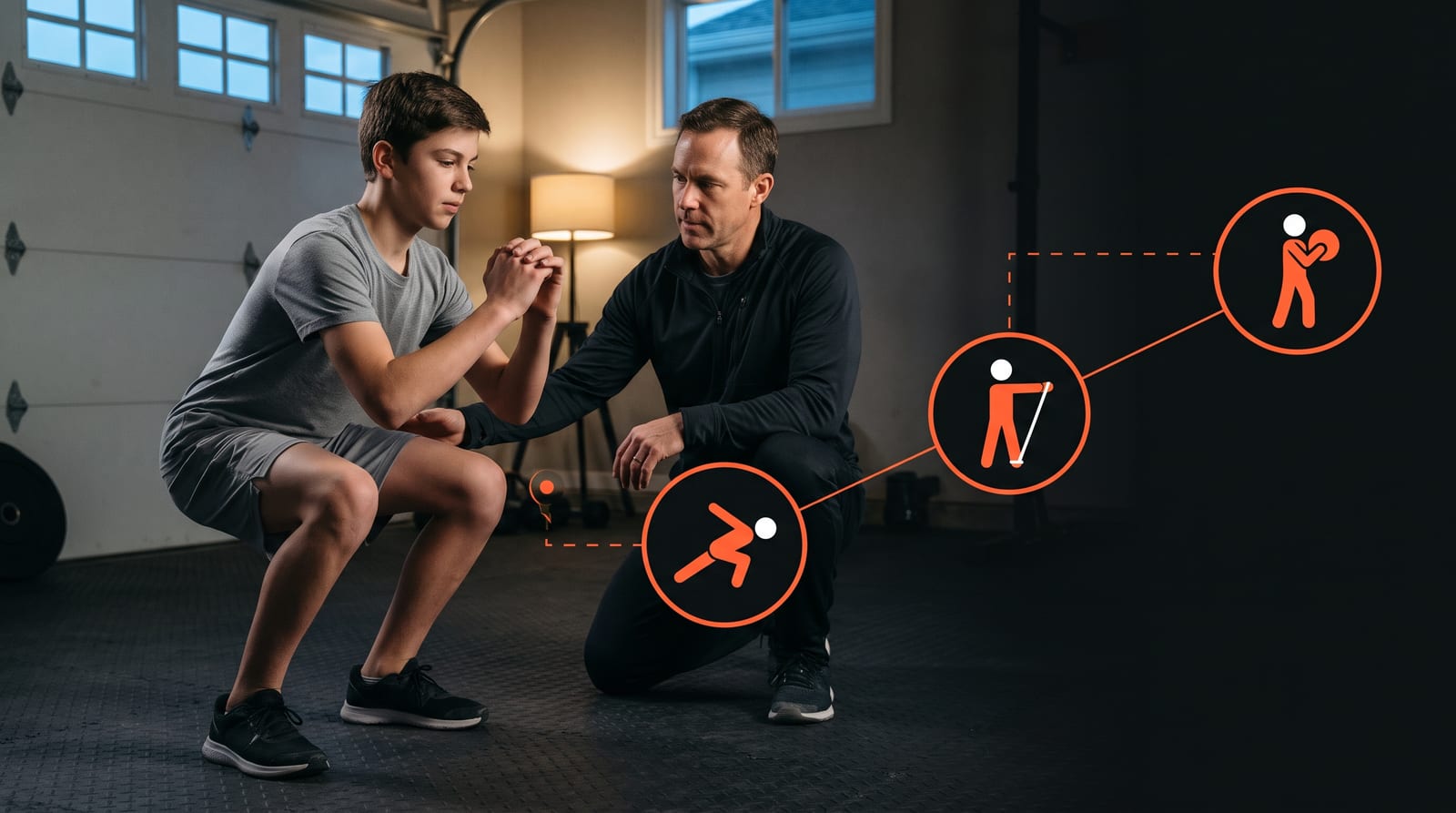
When starting out, bodyweight is the best tool available. Before a child ever touches a dumbbell or a barbell, they need to demonstrate that they can control their own body in space. Can they perform a bodyweight squat with their heels on the floor and their chest up? Can they hold a solid plank? Can they do a push-up without their lower back sagging? These are the prerequisites for adding external resistance.
Once they master bodyweight movements, progression should be slow and deliberate. Light resistance bands, medicine balls, and light dumbbells are excellent tools. The goal is to groove the movement pattern so deeply that it becomes second nature. If a child's form breaks down on the fifth repetition, the weight is too heavy, regardless of whether they can muscle through another five reps.
Essential movement patterns for young lifters
Instead of focusing on specific muscle groups like a traditional bodybuilding split, youth strength training should focus on foundational movement patterns. These are the mechanical actions that translate directly to sports performance and daily life. You want to ensure they are competent in the following areas:
- The Hinge: Teaching a child to bend at the hips while keeping a flat back (like a Romanian deadlift or kettlebell swing) is crucial for protecting their lower spine and building hamstring and glute strength.
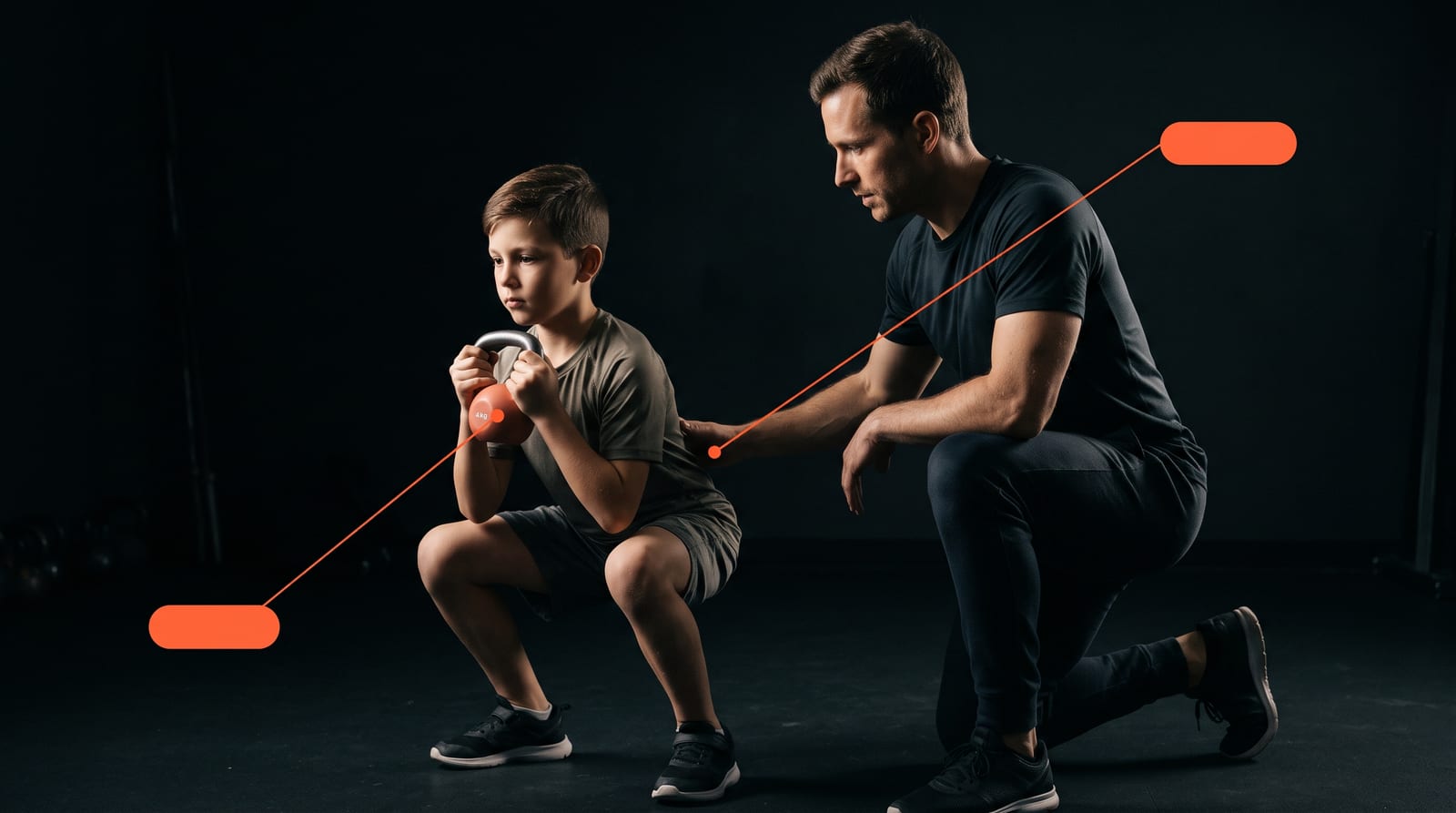
- The Squat: A fundamental human movement. Goblet squats with a light kettlebell or dumbbell are a fantastic way to teach kids to keep their torso upright while sinking their hips.
- The Push: Push-ups are the gold standard. If standard push-ups are too difficult, elevate their hands on a bench rather than dropping to their knees to maintain core engagement.
- The Pull: Bodyweight rows using TRX straps or rings, and eventually assisted pull-ups, build the upper back strength needed to counteract hours spent sitting at a school desk.
- The Carry: Farmer's carries (walking while holding moderate weights in each hand) build grip strength, core stability, and full-body tension.
Keeping the routine varied and engaging is just as important as the exercises themselves. Kids get bored easily. Turn the workout into a circuit, keep rest periods relatively short, and always end on a positive, successful note.
The role of a Personal Coach in youth fitness
Even if you are an experienced lifter yourself, teaching a child how to lift can be an entirely different challenge. Kids process physical cues differently than adults, and let's be honest—they don't always want to listen to their parents. This is where a qualified professional makes all the difference.
A Personal Coach understands how to scale movements for smaller bodies, how to keep the session engaging, and how to spot the subtle form breakdowns that lead to bad habits. They can provide an objective eye and create a structured environment that feels like a fun challenge rather than a chore. At Legacy Health and Fitness, your gym membership includes a free session with a Personal Coach. This is a perfect opportunity to discuss your family's fitness goals, learn how to safely navigate the equipment, and build a plan that works for your schedule.
Ultimately, the goal of youth strength training isn't to create a miniature powerlifter. It's to build a confident, resilient, and capable kid who views physical activity as a normal, enjoyable part of daily life. By asking is strength training safe for kids and doing the research, you are already taking the right steps to support their long-term health.
Ready to build a stronger foundation for yourself and set the standard for your family? Join Legacy Health and Fitness. We are a locally owned 24/7 gym serving Kuna and the Treasure Valley. With memberships starting at $49 (billed every 4 weeks), no long-term contract, and mobile phone entry, you have the flexibility to train whenever life allows.
Keep reading: The Best Training Program for Men Over 40 with a Coach in Kuna, ID
Frequently Asked Questions
Sources & what people are talking about
Ready to train on your schedule?