Training Recovery Over 40: What Changes for Idaho Athletes?
Training Recovery Over 40: What Changes for Idaho Athletes?
Hit 40 and suddenly that Monday workout leaves you feeling sore until Thursday? You aren't imagining things. When we look at training recovery over 40 what changes most is your margin for error. You can't just power through on bad sleep and a prayer anymore. Here at Legacy Health and Fitness in Kuna, Idaho, we see it all the time with Treasure Valley adults trying to balance work, family, and staying active.
This is general information, not medical advice. Legacy Health and Fitness offers coaching; any clinical evaluation, diagnosis, or treatment is handled privately by your SamaritanMD-licensed provider. Always consult your provider for clinical decisions.
The Physiology of Training Recovery Over 40: What Changes First?
Your body is incredibly resilient, but the cellular repair process naturally slows down as we age. Connective tissues like tendons and ligaments lose a bit of their elasticity. Muscle protein synthesis—the process your body uses to repair muscle damage after a heavy lifting session—becomes slightly less efficient. Research from professional bodies like the ACSM suggests that older adults often require more dedicated recovery time between intense resistance training sessions compared to their younger counterparts.
You might also like: The Best Training Program for Men Over 40 with a Coach in Kuna, ID
And that is perfectly normal. It just means the approach to your programming needs to evolve. You can absolutely still build strength and improve your body composition. But the days of crushing a heavy workout, eating a random protein bar, and waking up fresh are probably behind you. You need a deliberate framework for recovery.
Navigating the Treasure Valley Elements
Living in Idaho adds its own layer of stress to the recovery equation. Maybe you're tackling a 20-25 minute commute to Meridian or Boise every day. Maybe you're spending your weekends hiking the Boise foothills, or dealing with the physical toll of 100-degree summer heat and those inevitable smoky-air days from regional wildfires.
All of that environmental and lifestyle stress taxes your central nervous system. When your system is already working overtime to handle daily life, your gym recovery takes a hit. Recognizing how your outside-the-gym life impacts your inside-the-gym performance is step one to feeling better.
You might also like: The Science of Cold: Training and Recovery for Kuna Idaho Winters
Sleep Architecture and Hormonal Shifts
Sleep is where the actual magic happens. But as we cross into our 40s, sleep architecture shifts. You might find yourself spending less time in deep, restorative sleep—the exact phase where your body releases the most growth hormone to repair tissue. General guidelines from the Endocrine Society highlight that hormone health plays a massive role in how we recover, maintain energy, and preserve lean muscle mass.
Because sleep and baseline hormone health are highly individual, results may vary depending on your specific lifestyle, nutrition, and training history. But the foundational truth remains: protecting your sleep is the most powerful recovery tool you have.
If you're frustrated with stalled progress and want a structured approach, book a free consult with our team. We'll talk through your goals, get a plan, and get a price with absolutely no commitment.
Actionable Steps to Support Your Recovery
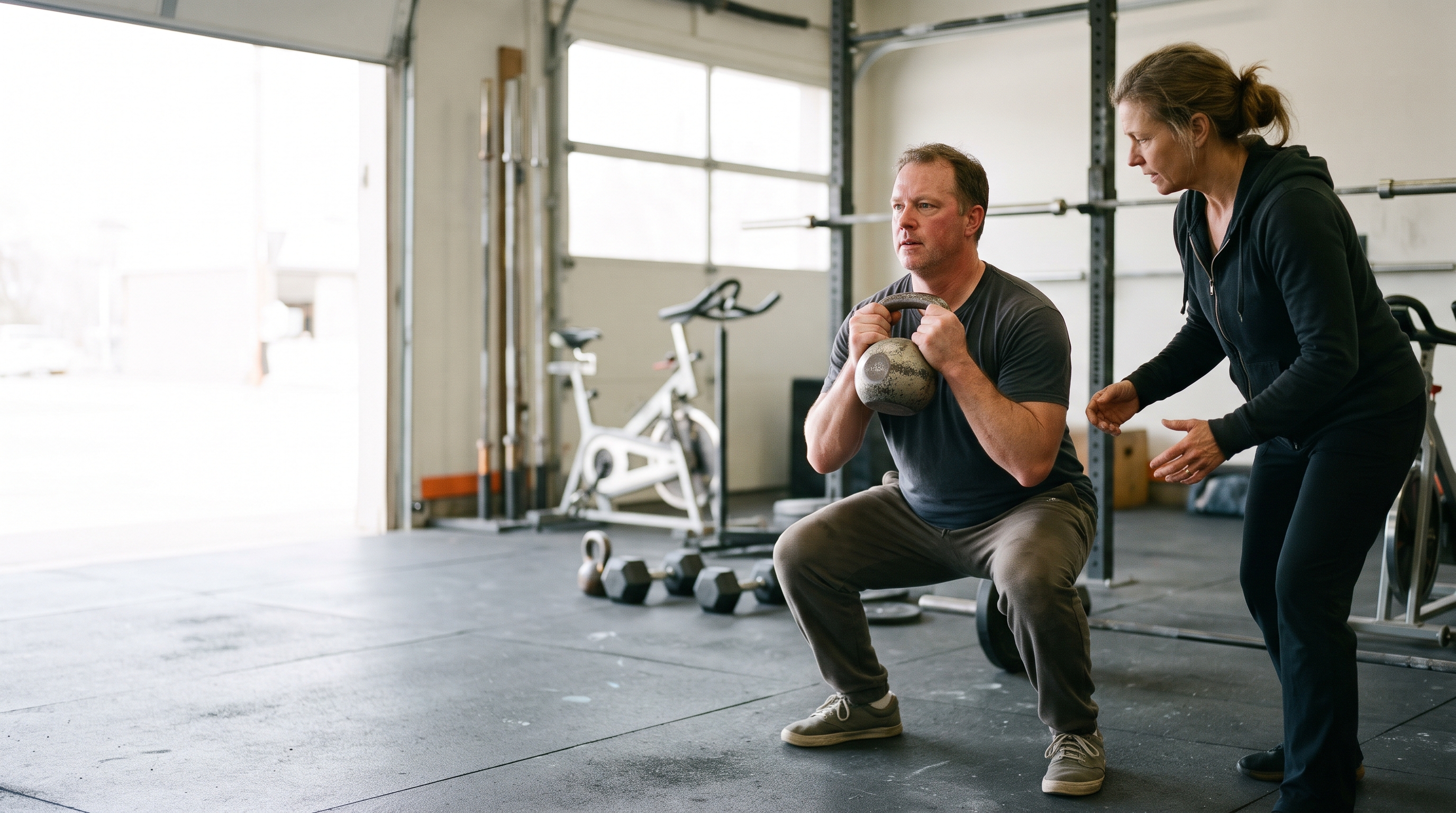
So, what do you actually do about it? First, prioritize protein timing. Getting adequate protein spread evenly throughout the day helps support muscle repair when your body's natural synthesis rates are slowing down. Second, focus on mobility and active recovery. You don't need a complicated routine; utilizing the open floor for stretching at the gym can make a massive difference.
Third, respect progressive overload but manage your volume. You don't need to destroy yourself to get a good workout. If you need help figuring out what that balance looks like, your gym membership includes a free session with a Personal Coach if you're local to Kuna. Use it to get a fresh set of eyes on your programming.
How Our Wellness Program Fits the Puzzle
For the over-35 athlete whose body stopped responding to the old routines, our Wellness program is built to close the gap. This is a coaching-led offering that pairs personalized training, a nutrition framework, and weekly check-ins to keep you accountable.
Depending on your specific goals, we offer 60-Day programs like Performance (focused on strength and recovery), Metabolic (for sustainable body-composition change), and Health (for longevity-focused training). It's not about quick fixes; it's about building a sustainable routine that respects where your body is at right now.
Ready to figure out what works for you? Book a free consult with our team today. If you just need a great place to train, join Legacy Health and Fitness. We offer 24/7 access with mobile phone entry, no long-term contracts, and memberships starting at $35 (billed every 4 weeks). Doors are always open.
Keep reading: Functional Fitness Training Benefits in Kuna, Idaho
Frequently Asked Questions
Ready to talk through your goals?