Slow Recovery After Workout Over 40? A Kuna Gym Guide
The Reality of Midlife Muscle Recovery
You remember the days when you could hit the gym hard, sleep six hours, and do it all again the next afternoon. But if you are suddenly dealing with slow recovery after workout over 40, you already know the rules have changed. The delayed onset muscle soreness (DOMS) that used to fade in a day now lingers for three. Your joints feel a little stiffer, and your energy levels might tank by mid-afternoon. You aren't imagining it, and you aren't just "getting old." Your body's response to physical stress is shifting.
This is general information, not medical advice. Legacy Health and Fitness offers coaching; any clinical evaluation, diagnosis, or treatment is handled privately by your SamaritanMD-licensed provider. Always consult your provider for clinical decisions. Here at Legacy Health and Fitness in Kuna, Idaho, we see it every day. Working adults come in frustrated because the training routines they used in their twenties are now leaving them exhausted rather than energized. The good news? You don't have to stop lifting heavy or pushing yourself. You just need to change how you manage the stress of training.
The Physiology: Why Does It Take So Long Now?
When you strength train, you are intentionally creating micro-tears in your muscle fibers. The actual fitness adaptations—getting stronger, building a leaner body composition—happen during the recovery phase, not during the workout itself. Research from organizations like the National Strength and Conditioning Association (NSCA) indicates that as we age, the cellular repair process simply takes longer. Muscle protein synthesis becomes slightly less efficient, meaning your body needs more time and better nutritional support to rebuild tissue.
You might also like: Training Recovery Over 40: What Changes for Idaho Athletes?
Beyond the muscles themselves, your central nervous system (CNS) and connective tissues take a heavier hit. Tendons and ligaments lose some of their elasticity, making them more prone to irritation if you rush your recovery. And hormonal shifts play a massive role. General research on adult hormone health shows that natural changes in midlife can impact sleep architecture and recovery efficiency. Because of these factors, slow recovery after workout over 40 is a perfectly normal physiological response to an outdated training program. Results may vary depending on your specific training history and lifestyle, but optimizing your recovery framework can make a profound difference.
How Treasure Valley Life Impacts Your Midlife Training
Let's talk about the environment you're actually training in. Living in Kuna means you are likely part of the massive commuter wave driving 20 to 25 minutes into Boise or Meridian every morning. That windshield time, combined with sitting at a desk or working a demanding trade job, adds structural stress to your body before you even step foot in the gym.
Then there is our Idaho weather. When summer temperatures in the Treasure Valley push past 100 degrees, or when regional wildfires fill the air with smoke, your body's baseline stress goes up. Even our icy foothills winters demand more energy just to function. If you spend your weekends hiking the Boise foothills, hunting, or walking the Indian Creek Greenbelt, you are adding active recovery—or sometimes, just more fatigue—to your week. A midlife training program has to account for this local lifestyle. You cannot train like a professional athlete who sleeps nine hours a day when you are a working parent juggling school drop-offs and a demanding career.
You might also like: Morning Workout vs. Evening Workout: What's Best for Your Kuna, Idaho Schedule?
Adjusting Your Training Volume: More Is Not Better
The most common mistake people make when they notice slow recovery after workout over 40 is trying to push through it with more volume. They think they are losing their edge, so they add an extra day to their split or throw in more exercises. This usually backfires. If your body is struggling to recover from three days of lifting, giving it five days of lifting will only dig a deeper hole.
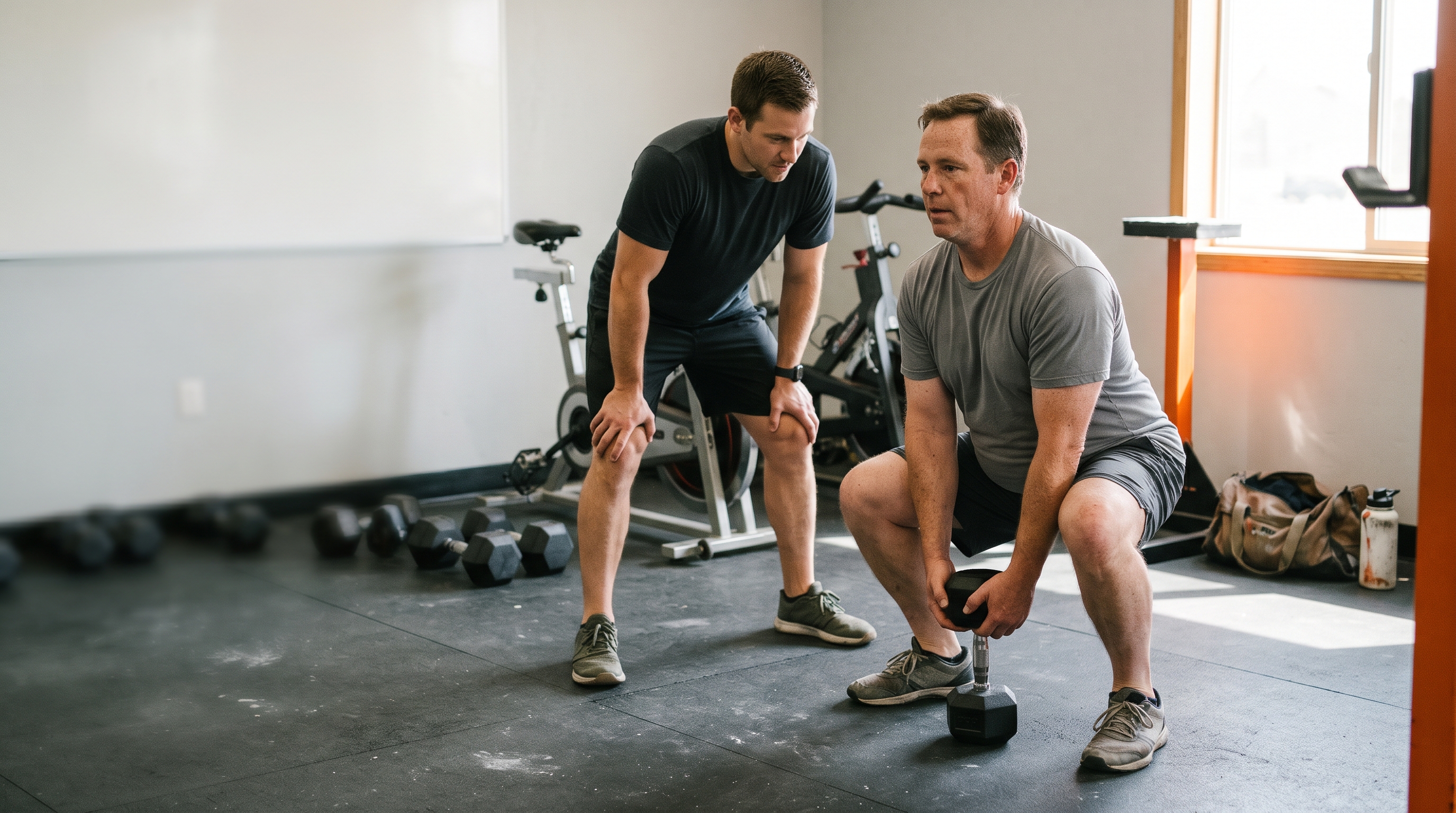
Instead, focus on training intensity over junk volume. You don't need five different chest exercises to build strength. Two or three well-executed, compound movements taken to a challenging threshold will stimulate the muscle without completely frying your central nervous system. This is where a strategic approach to strength training Kuna residents can actually sustain comes into play. Prioritize progressive overload—lifting slightly more weight or doing one more rep over time—but cap your workouts at 45 to 60 minutes. Get in, stimulate the muscle, and get out so the recovery process can begin.
Nutrition and Sleep: The True Drivers of Recovery
You cannot out-train a poor recovery protocol. If you are experiencing slow recovery after workout over 40, the first place to look is your plate and your pillow. Protein distribution becomes incredibly important in midlife. Eating one massive steak at dinner isn't as effective for muscle repair as spreading a solid protein intake across three or four meals throughout the day. Your body needs a steady supply of amino acids to support muscle protein synthesis.
Sleep is the other non-negotiable. Deep sleep is when your body does its heaviest cellular repair. If you are getting by on five hours of interrupted sleep, your recovery will drag. Improving your sleep hygiene—cooling the room, cutting off screens, and managing evening stress—is just as critical as your workout routine. If you need a structured framework to get these habits dialed in, our coaching team can help.
Book a free consult with our team to talk through your goals, get a plan, and get a price. The free intro call is with the Legacy team to discuss fit and goals. If the Wellness program is a fit, a paid SamaritanMD provider visit is the separate next step.
When It Is Time for a Midlife Training Program
Sometimes, tweaking things on your own isn't enough. If you have stalled out on your body composition goals, or if training has become a source of chronic fatigue rather than energy, it might be time to look at wellness coaching over 40. Legacy Health and Fitness's Wellness program is a coaching-led offering designed specifically for these challenges.
We offer three 60-Day programs tailored to different needs. The Legacy Wellness Performance program is built for the over-35 athlete whose body has stopped responding to their old routines, focusing heavily on personalized strength and recovery coaching. The Legacy Wellness Metabolic program provides a strength-first coaching and nutrition framework for sustainable body-composition change. And the Legacy Wellness Health program focuses on recovery, sleep, and lifestyle coaching for longevity-focused training. These aren't generic templates; they are comprehensive frameworks designed to support your specific physiology. And if you are local to Kuna, your standard gym membership also includes a free session with a Personal Coach at our onboarding page to help you get started on the floor.
How Legacy Health and Fitness Supports Your Goals
Finding the right environment is just as important as finding the right program. Legacy Health and Fitness is a locally owned 24/7 gym Kuna residents trust because we respect your time and your budget. We don't do massive, crowded aerobics classes or pretend to be a luxury spa. We provide reliable equipment, a welcoming community, and expert coaching for people who want to put in the work.
Because we offer 24/7 access with mobile phone entry (no easily lost keycards required), you can train on your schedule—whether that means a 4:30 AM session before a swing shift or a late-night workout after the kids are asleep. We offer flexible memberships starting at $35 (billed every 4 weeks), with no long-term contracts and no cancellation fees (just 14 days' written notice). It is a Treasure Valley gym built for real life.
If you are tired of battling slow recovery after workout over 40 and want a coaching framework that actually respects your physiology, we are here to help. Book a free consult with our team. It is a no-commitment conversation to talk through your goals, get a plan, and get a price. Let's build a training routine that gives you energy instead of taking it away.
Keep reading: How to Get Back in the Gym After a Break in Kuna, Idaho
Frequently Asked Questions
Ready to talk through your goals?